
Taiwan is divided into 22 counties and special municipalities, almost all of which touch the island’s 1,566-km-long (973 miles) coastline. Among these divisions, Nantou County is a landlocked region at the very heart of Taiwan. The county has almost an eighth of the country’s entire land area. In terms of elevation, it ranges from 73 m (240 ft) above sea level to 3,952 m (12,966 feet) — the highest point of land in Northeast Asia.
As you’d expect of a destination that’s defined by soaring peaks, misty tea plantations, and indigenous communities, Nantou offers international visitors a profound shift in pace from the neon-lit streets of Taipei. Presenting a beguiling mix of landscape and heritage, it deserves to be a cornerstone of your Taiwan itinerary. Some travellers make the mistake of rushing through Nantou when getting from Hualien and Taroko Gorge in the northeast to Alishan in the southwest. Our advice is always this: if you can, slow down!
Drawing on the expertise we’ve accumulated since 2012 — not to mention the many years of curating, guiding, and travel writing we did before that — the team at Life of Taiwan is dedicted to crafting fully-personalised private guided tours that match the interests and requirements of our well-travelled clients. Whether you wish to sip tea with one of Taiwan’s oolong masters, meet Austronesian artists, or walk in silence through sublime bamboo groves, we can make it happen.
Nantou’s crown jewel: Sun Moon Lake
No visit to Nantou is complete without seeing the shimmering turquoise waters of Sun Moon Lake. The lake’s name is derived from its unique shape: the round eastern section resembles the sun, while the narrow western part is shaped like a crescent moon.
Some visitors are content to take in the scenery over a few hours, breaking the long drive to or from Taichung. If time allows, we recommend staying at least one night in a lakeside hotel (there’s a wide range of options) so you can enjoy a boat tour and perhaps catch the sunrise. Around the lake there are several points of interest. Cien Pagoda, a memorial to Chiang Kai-shek’s mother, offers near 360-degree views of the basin from an elevation of exactly 1,000 meters above sea level. Xuanzang Temple and Xuanguang Temple hold precious relics of Xuanzang, a Buddhist monk who almost 1,400 years ago walked from China to India, where he gathered and translated religious texts before making the perilous journey home. The waterside community of Ita Thao is the ‘capital’ of one of Taiwan’s smallest ethnic groups, the Thao people. The village is also the jumping-off point for the Sun Moon Lake Ropeway, a scenic cable car ride that’ll convey you to a theme park/cultural venue called the Formosan Aboriginal Culture Village.
One of the county’s most appealing tea producers isn’t far from the lake. At the Antique Assam Tea Farm, a restored Japanese-era plantation, visitors can learn about organic growing methods and the art of the tea ceremony. From there, it’s a 30-minute drive via the town of Puli (a good place to get lunch) to Chung Tai Chan Monastery. The latter, designed by the same architect as Taipei 101, is a marvel of modern religious architecture. One of the largest Buddhist monasteries in the world, it’s best appreciated via a prearranged guided tour during which you’ll get to see more of the complex and hear an explanation of the sect’s brand of Chan Buddhism (better known in the English-speaking world as Zen Buddhism). The on-site Chung Tai World Museum has an engaging collection of Buddhist art and artefacts.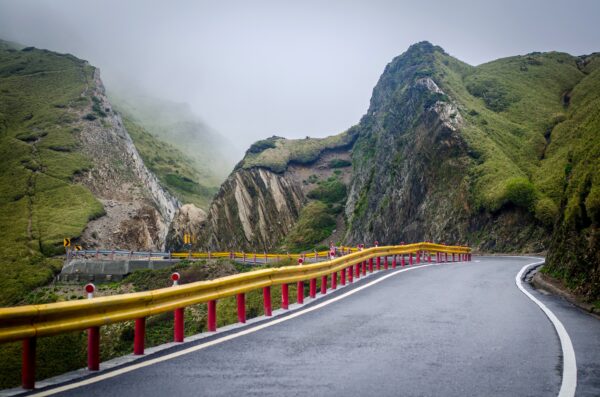
High-altitude wonders: Hehuanshan and Qingjing
Nantou is home to Taiwan’s most dramatic alpine scenery. The county borders the summits of Mount Jade (Yushan), the highest peak in Northeast Asia, and Snow Mountain (Xueshan). For those who prefer to reach the clouds without a multi-day trek, Highway 14A provides spectacular access. Cresting at 3,275 m (10,745 ft) at Wuling, it is the highest surfaced road in Taiwan and offers a gateway to the high-altitude hiking trails of Hehuanshan. In recent years, there’s been a concerted effort to remove sources of light pollution in order to create Hehuan Mountain Dark Sky Park. The park’s five designated viewing locations, all more than 2,700 m (8,858 ft) above sea level, draw both stargazers and sunrise watchers.
Nestled in these mountains is Qingjing Farm, often called ‘Taiwan’s Little Switzerland’. Originally established as a project for retired soldiers, it’s now a premier mountain resort famous for its rolling pastures and grazing sheep. It provides a cool refuge during Taiwan’s humid summers and a rare chance to see snowfall during the winter months. To enjoy the area’s superb scenery without entering the farm itself, go for a saunter along Qingjing Skywalk, an elevated path that (in line with government efforts to make Taiwan’s destinations more accessible) is wheelchair-friendly.
…and something for train buffs
Alishan’s remarkable mountain railway gets a lion’s share of attention, but Taiwan has other branch lines worth investigating. The Jiji Branch Railway follows the northbank of the Zhuoshui River, the island’s longest waterway, from the town of Ershui in Changhua County to Checheng, an old logging settlement that lost most of its population when Taiwan changed its forestry policy from exploitation to conservation. Built in the early 1920s to carry materials for hydro-electric plants into the interior, and to bring sugar and timber to the lowlands, this 29.7 km-long (18.5 miles) railway provides access to the quaint town from which it gets its name.
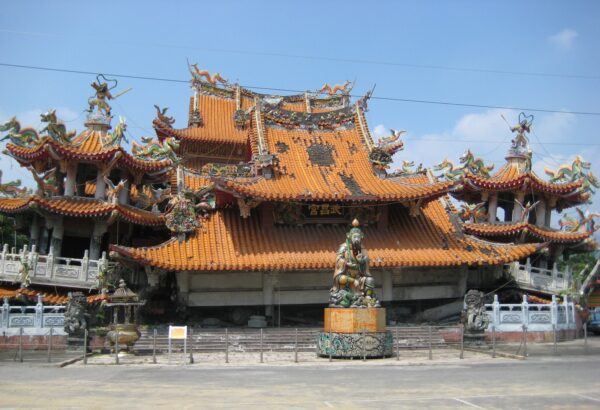
Jiji, the fourth of the line’s six stops, has a number of interesting sights: The 1933 station building (reassembled after the big earthquake in 1999); Mingsin Academy of Classical Learning (established in 1885 by local camphor tycoons so their sons could receive a quality education); the Taiwan Biodiversity Research Institute (a government entity which both studies the island’s fantastic natural wonders and rehabilitates injured wildlife); and Wuchang Temple. The last of these was little known outside the town until it collapsed during the 1999 disaster, leaving a ruin that makes for compelling photos. The shrine’s icons and effigies were rescued and are now honoured in a new house of worship that’s adjacent to the shattered shell of the original.
Whether you’re already set on exploring Taiwan, or you’ve just began to research it as a possible destination, do contact us today so our expert itinerary designers can assist you by devising a travel plan that fits your needs and matches your interests.