
Taipei
Taiwan’s capital is a city of perfect proportions: Big enough to delight those who stay a week or more, yet so compact you’ll waste very little time getting from Wanhua’s ancient temples to the hipster-youth enclave of Ximending or to the glitzy malls in Xinyi District.
Visitors hoping to make the most of each day can spend mornings exploring the hills that surround the metropolis, afternoons taking in manmade attractions like Taipei 101 and the National Palace Museum, and evenings indulging in the city’s fabulous cuisine. Taipei (which simply means ‘north Taiwan’) is a city of broad boulevards and sleek office and apartment buildings. Yet between these steel-and-glass towers, traditional herbalists and hole-in-the-wall eateries thrive. The 19th century is never more than a few steps from the 21st.
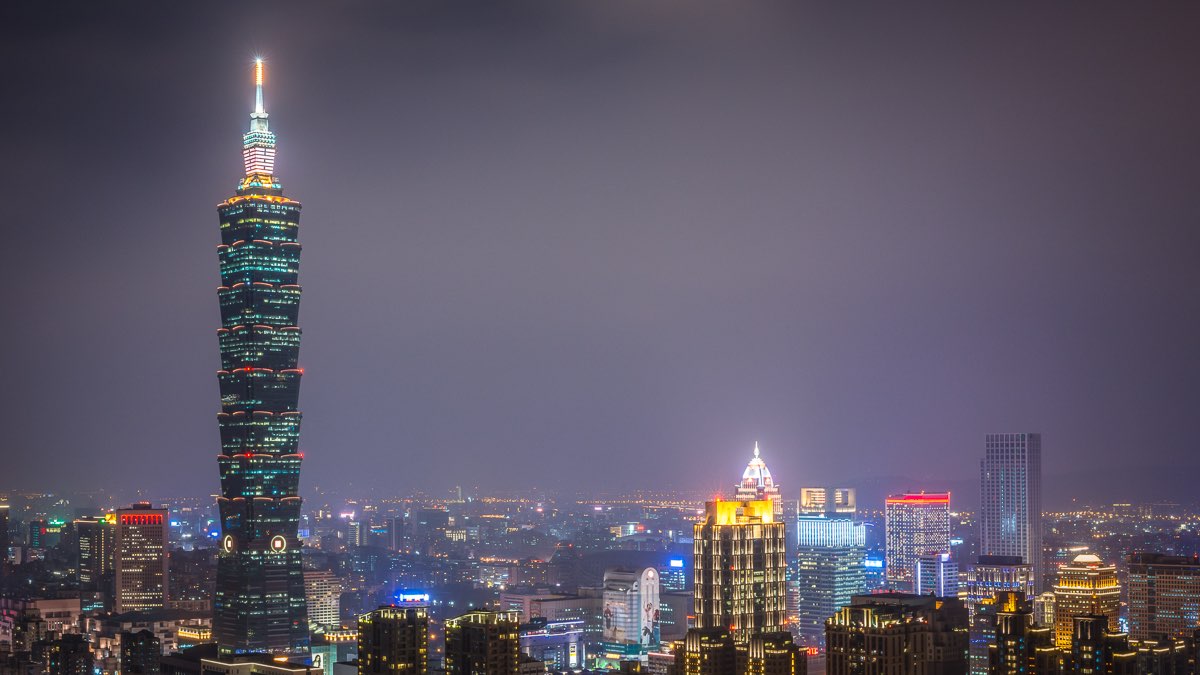
Only one in three of Taipei’s buildings are older than the Chiang Kai-shek Memorial Hall, which was completed in 1980. However, Han Chinese have been settling here for over 300 years, and the original inhabitants of the Taipei Basin — the Austronesian Ketagalan people — were quickly overwhelmed. Fascinating traces of old Taipei still exist near the river in Dadaocheng and in Wanhua, where Chinese merchants bartered with Ketagalan natives, exchanging imported cloth and cooking utensils for the latter’s vegetables and charcoal. British and American tea traders came later, putting Taiwan’s fabulous oolong beverage on the world tea map.
In 1895, Japan seized Taiwan from the weakening Chinese empire, and set about civilising and industrialising the island. Few parts of Taiwan were changed more by the Japanese than Taipei, who made the city their capital. They pulled down its protective walls, widened the streets, and erected imposing public buildings designed to impress upon the natives that their new rulers were both wise and invincible. Several of these, such as National Taiwan Museum and what’s now the Presidential Office, still play an important role. Colonial rule ended in 1945 yet Taiwanese born long after show an enduring love for sashimi, sushi, and ramen as well as Japanese fashions.
Just after World War II, a second influx boosted the city’s population (currently 2.43 million) and added additional layers to the local culture landscape. Following their defeat at the hands of Mao Zedong’s communists, hundreds of thousands of Nationalists from every province of China fled to Taipei. Among them was Chiang Kai-shek, who headed the Nationalist government in-exile in Taipei from 1949 to his death in 1975.
Chiang and followers added the Grand Hotel, the Sun Yat-sen Memorial Hall, the National Palace Museum and the National Revolutionary Martyrs Shrine to the cityscape. Many ordinary refugees took to selling food to make a living, which is why Taipei now has excellent Hunanese, Shanghainese, and Szechuan eateries.
Chiang regarded Taipei as a provisional capital rather than a permanent home, convincing himself he’d one day defeat Mao and retake the mainland. But thanks to massive investments in everything from transport to public art there’s nothing makeshift about modern Taipei. Recent improvements in the road and rail systems mean it’s now feasible to stay in Taipei, enjoying the comforts and entertainments available there, while making day-trips to endearing destinations like Tamsui, Jiufen, and Wulai.
Taipei is a visitor-friendly place. It’s exceptionally safe and easy to navigate on your own. That said, exploring the city with a knowledgeable guide will unlock layers of history, culture, and culinary nuances that smartphone maps and standard guidebooks often miss. Our guides act as cultural bridges, deciphering complex temple rituals and folk customs, providing context to historical sites, and navigating both morning produce markets and bustlings night markets. They can introduce you to off-the-beaten-path culinary gems while bridging language barriers, ensuring every hour of your trip is well spent and transforming a simple sightseeing trip into a deeply immersive and personalised experience. Contact us today and get the ball rolling on an in-depth private guided tour of Taipei and its surroundings.