
No two countries are the same! One of the most fascinating aspects of travel is encountering and understanding differences in behaviour and expectations. Rules and conventions that go unsaid in one society have to be spelled out in another. Habits and actions which are fine here may be a serious faux pas there. Furthermore, the ways in which societies keep people in line can vary in surprising ways. Here are three types of sign that have intrigued and confused first-time visitors to Taiwan.
Shiba says…
The Shiba Inu dog breed is a cultural ambassador and symbol of the Taipei Metro, and in the past few years appealing posters featuring the cute canine have appeared throughout the network, urging passengers to follow the rules and behave in a considerate manner.
These cute ‘Shiba says’ notices remind metro commuters not to run on escalators, to take off their backpacks when trains are packed, to give way to guide dogs and their owners, and to immediately report any suspicious people or objects. It’s a friendly rather than dictatorial approach to enforcing the laws and norms that make the Taipei Metro such a civilised way to get around Taiwan’s capital.
The vegetarian swastika
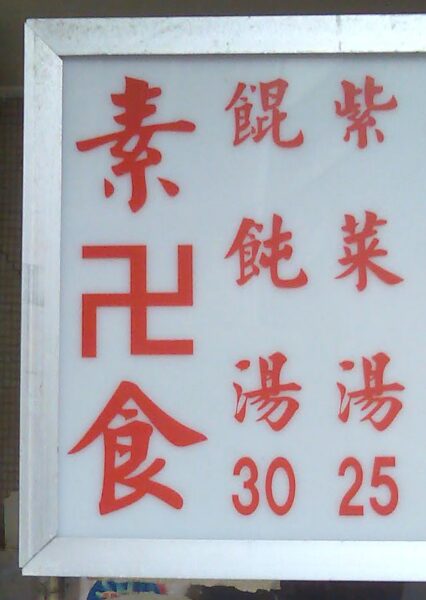
If you see a swastika outside an eatery in Taiwan, it’s a religious and dietary symbol, not a political one. The left-facing swastika (卍) is shorthand for Buddhism, and when part of a restaurant sign, it means that the establishment serves Buddhist vegetarian food.
Buddhist vegetarianism in Taiwan is a bit different to standard Western vegetarianism. The dishes not only exclude meat and seafood, but also what are categorised as the ‘five pungent spices’. Serious Buddhists avoid garlic, onions, leeks, chives, and green onions as they’re believed to excite the senses and disturb meditation. This doesn’t mean the food is bland, however: Taiwan’s best vegetarian restaurants serve up top-notch cuisine, you’re bound to agree.
 Because some vegetarian restaurants include eggs, milk, or cheese in their recipes, vegan travelers should always verify ingredients before ordering. Many establishments feature ‘mock meats’ — dishes crafted from soy, wheat gluten, or mushrooms that are shaped and seasoned to resemble everything from sausages to ribs to Kung Pao chicken. While these proteins may not perfectly mimic the taste of real meat, they’re often delicious in their own right, even if their realistic appearance occasionally catches Western visitors off guard.
Regardless of your dietary needs, our expert itinerary designers can craft a personalized travel plan that keeps you well-fed and satisfied. Just give us a fair bit of warning!
‘Mercy release’ not allowed
Alongside notices that inform visitors they should camp, barbeque, or little, at scenic spots around Taiwan you may well come across signs telling people they shouldn’t engage in an ancient rite Chinese-speakers call fang sheng (放生, ‘mercy release’).
Buddhists and followers of certain other East Asian faiths believe that releasing captured animals creates good karma and will bring them good fortune. In its original form, this practice saw believers purchase animals destined for slaughter so they could set them free. For decades, however, it’s been an industry. Millions of birds, fish, and insects are bred or captured specifically for such rituals.
The problem is that, in reality, ‘mercy release’ is anything but merciful. The creatures that are released often perish quickly because they’re unsuited to the environment — and those that do survive sometimes wreak ecological havoc. Like other invasive species, they may compete with native creatures for food and nesting spots, or they might simply eat them.
The government is now enforcing regulations designed to ensure that only releases approved by the authorities go ahead. An interesting initiative by a local ocean conservation group has received official backing; the group now works with religious organisations to combine approved releases of fish with mercy-release activities. Educating the public about the true impact of mercy release has also helped turn the tide.
Whether your primary interest is culture, ecology, food, or history, Life of Taiwan can leverage a wealth of experience and a huge amount of passion to create a once-in-a-lifetime Taiwan private tour experience for you. We look forward to hearing from you!