
Across Taiwan’s verdant foothills, clinging to steep mountain slopes, and thriving around quaint rural villages, bamboo is one of the defining features of the natural landscape. At least 89 species of bamboo grow on the island, 25 of which are native. They vary greatly in height, girth, and — from a human perspective — utility. More than just a fast-growing plant and a gorgeous backdrop to mid-elevation hiking trails, bamboo (in Mandarin Chinese: zhu, 竹) has served as an essential material for everyday life, an artistic medium, and even a symbol of spiritual and philosophical culture.
Taiwanese culture is based mainly on traditions brought to the island by Han Chinese settlers who began arriving in the first few decades of the 17th century. Their descendants account for around 94 percent of the country’s 23.2 million people; roughly equal numbers of Austronesian indigenous people and foreign residents account for the remainder. In Han tradition, bamboo holds a universally revered symbolic meaning. In visual arts, it often signifies integrity and moral character, its hollow, straight stem representing uprightness, humility, and open-mindedness. At the same time, being flexible yet sturdy, and able to survive the strongest of storms, it’s seen as a metaphor for resilience. In Taoist rituals, tall bamboo poles adorned with lanterns are erected to guide spirits.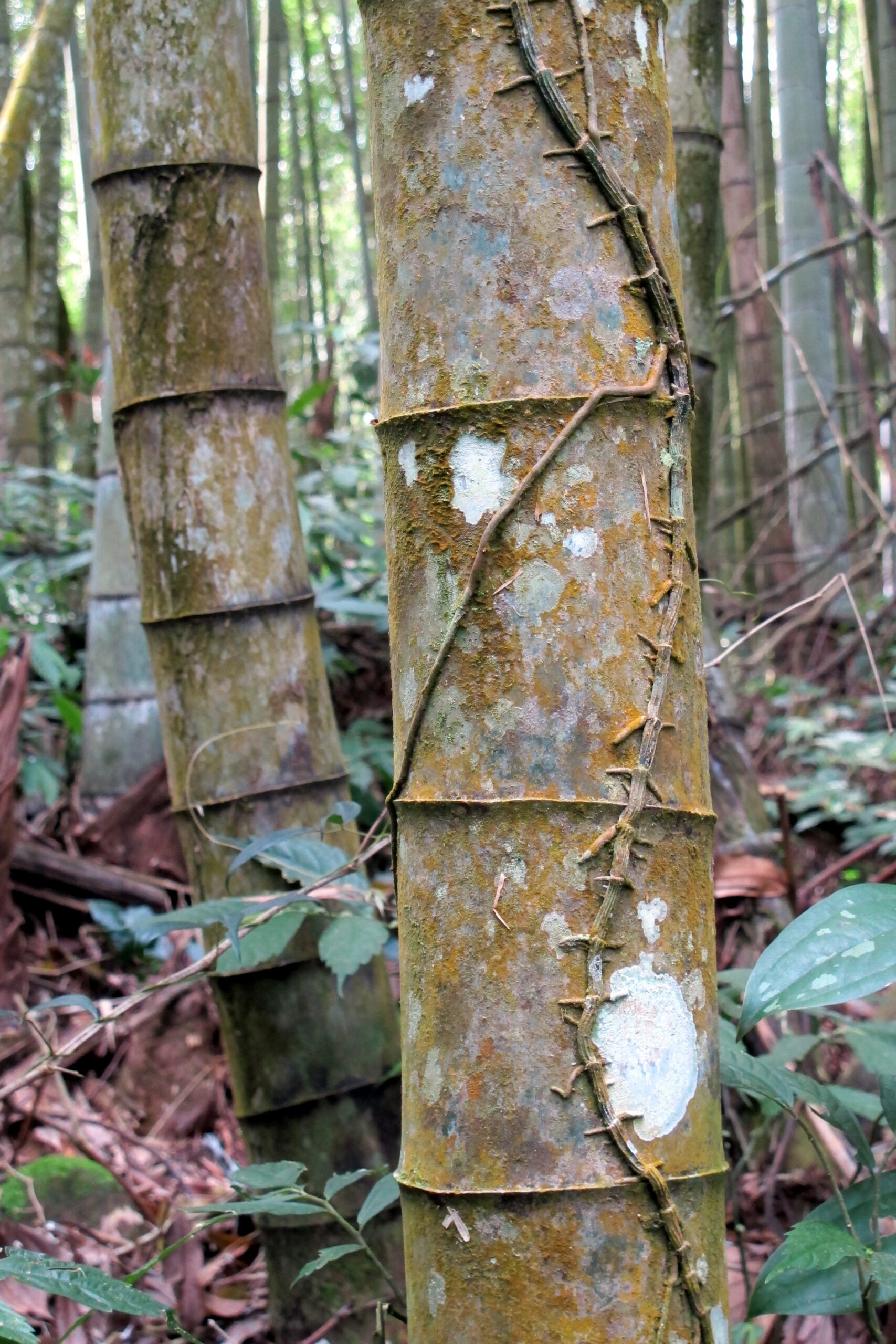
Long before Taiwan became the safe, friendly society it now is, Han settlers on the frontier often planted thick stands of thorny bamboo around their homesteads, to provide protection against both typhoons and bandits. Bamboo splints form the core structure of joss sticks (the entire nine-step process, which includes dipping and twisting, is well worth seeing). Even now, hard-to-sink bamboo rafts are widely used as angling platforms on Taiwan’s rivers and coastlines.
Bamboo in the kitchen
Beyond its near ubiquity in the countryside, bamboo plays a crucial role in Taiwanese culinary traditions. Tender seasonal bamboo shoots (zhusun, 竹筍) are prized across the island for their crisp texture, appearing in everything from braised delicacies and pickled sides to savory bamboo shoot soup. The cuisine of inland Amis clans features dwarf bamboo harvested between March and May, often grilled, stir-fried, or cooked with salted pork.
Bamboo is equally essential as cooking equipment. Before stainless steel and modern electric appliances became common, bamboo steaming baskets were found in almost every kitchen. Hoklo families used these to steam oily rice, Lunar New Year treats, and sticky rice cakes like red turtle cake. For those who relocated to Taiwan from the Chinese mainland after World War II, however, such steaming baskets were mainly used to heat up wheat-flour or rice-flour buns. For the sake of convenience, most homes now have an electric steamer. But if you go to one of the island’s countless dumpling or dim sum restaurants, you can expect to see these baskets stacked a dozen high, with kitchen staff expertly switching them from one level to another to ensure the food is cooked perfectly.
Bamboo arts and crafts
Before plastics became available and metal items affordable, bamboo was a key construction and manufacturing material in Taiwanese society. Towns like Zhushan (its name literally translates as ‘Bamboo Mountain’) in Nantou County emerged as thriving industrial hubs centered on bamboo harvesting and processing.
In the nearby county seat, Nantou Bamboo Museum displays an impressive range of items made using bamboo. Bamboo stems can be turned into cages, huts, and pigpens, while the leaves are still widely used to wrap foods like zongzi (粽子, pyramid-shaped rice dumplings filled with pork, peanuts, mushrooms, and other delectables). If you had set foot in a typical Taiwanese home a century ago, you would’ve seen baskets, boxes, chairs, cooking utensils, cribs, toys, and even pillows made of bamboo. Hanging outside, they’d probably be a bamboo yoke for the family water buffalo [pictured below]. Like many exhibition galleries in Taiwan, Nantou Bamboo Museum is open from 9am to 5pm every day except Monday, and admission is free.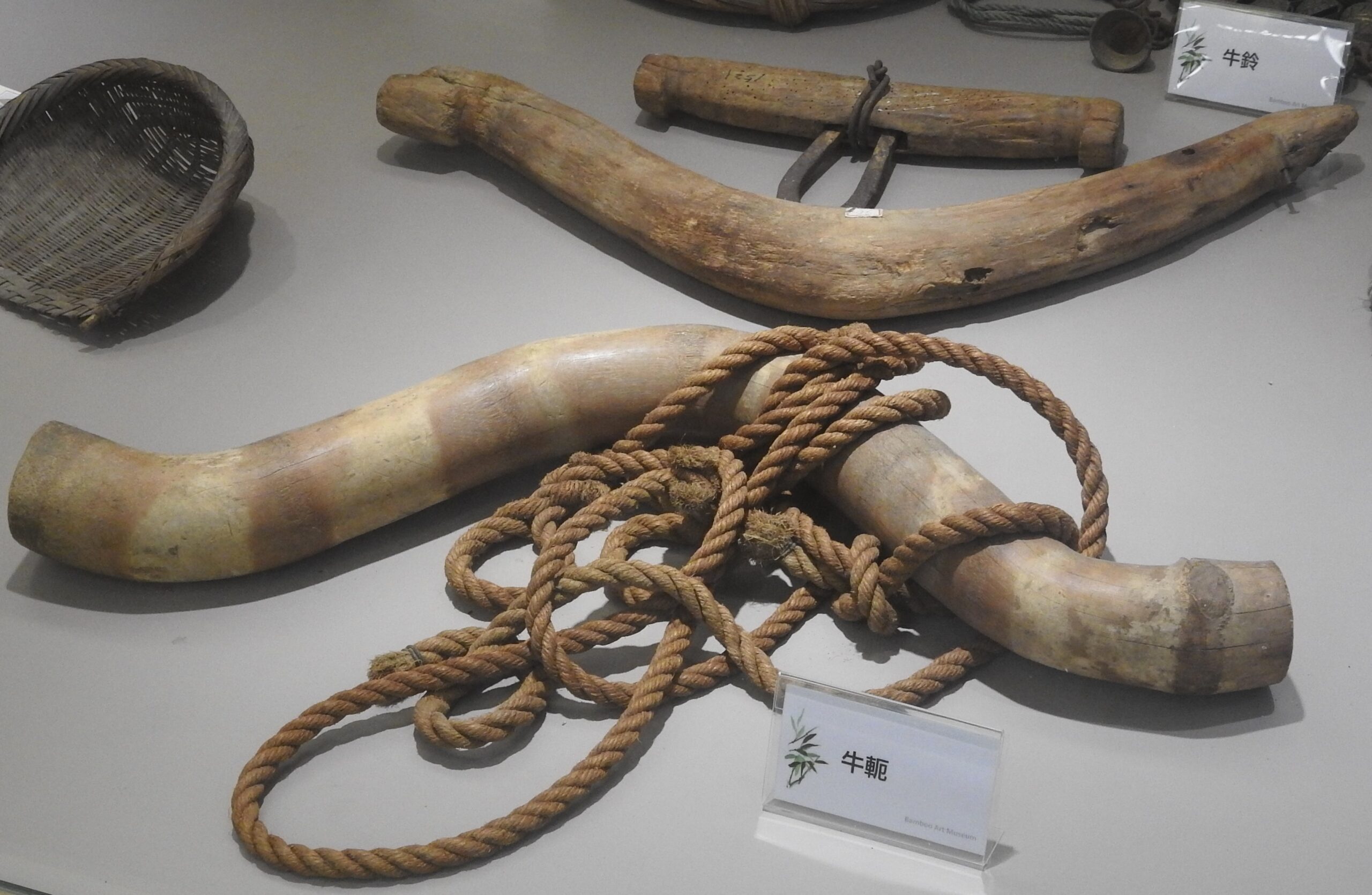
Some of Taiwan’s indigenous tribes depended on bamboo to make traps, assemble bows and arrows, and craft musical instruments like nose flutes, mouth harps, and xylophones. In the days of yore, groups of men — both Han and indigenous — sometimes spent days away from home, venturing into the foothills where they harvested bamboo and turned it into charcoal which they hauled back for personal use or sale. In recent years, local scientists and entrepreneurs have become interested in the potential of activated bamboo charcoal, which can be used to filter water or remove industrial pollutants from the air, or as an ingredient in various medical and skincare products.
The Bamboo Charcoal Culture Campus in Tainan’s Longqi District is an excellent place to learn about the past, present, and future of the bamboo charcoal industry, but if you don’t speak Chinese you’ll need a knowledgeable guide to talk you through the details. Whatever your interests, be they culinary, cultural, ecological, or technological, contact Life of Taiwan today and we’ll begin putting together an itinerary that, and we say this with confidence, will leave you delighted, surprised, and more than satisfied.